Demo 1 interviews with users and an expert
The team interviewed 5 people from the target audience and a fintech professional to evaluate Demo 1: perceptions of the brand, customization, the preview and the ordering flow.
Marketing in Digital Era · UEH · 2026
A story behind the poemBranding and website development for personalized wooden dolls
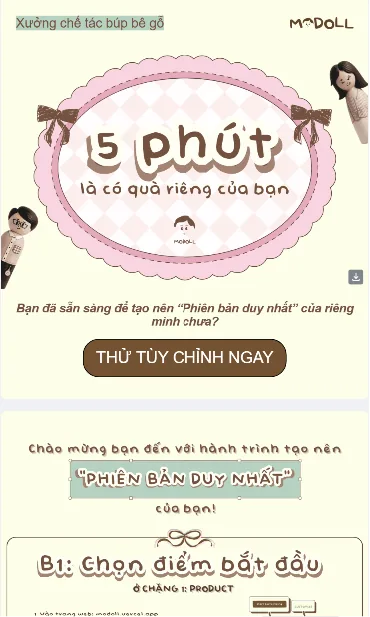
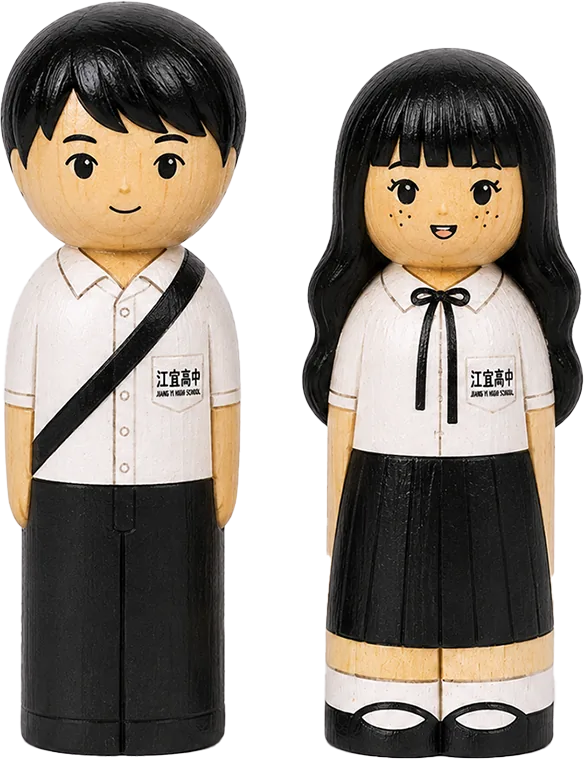
MODOLL is a simulated wooden doll brand created for a Digital Marketing course. As Project Leader, I developed the brand and website and coordinated 3 digital marketing channels.
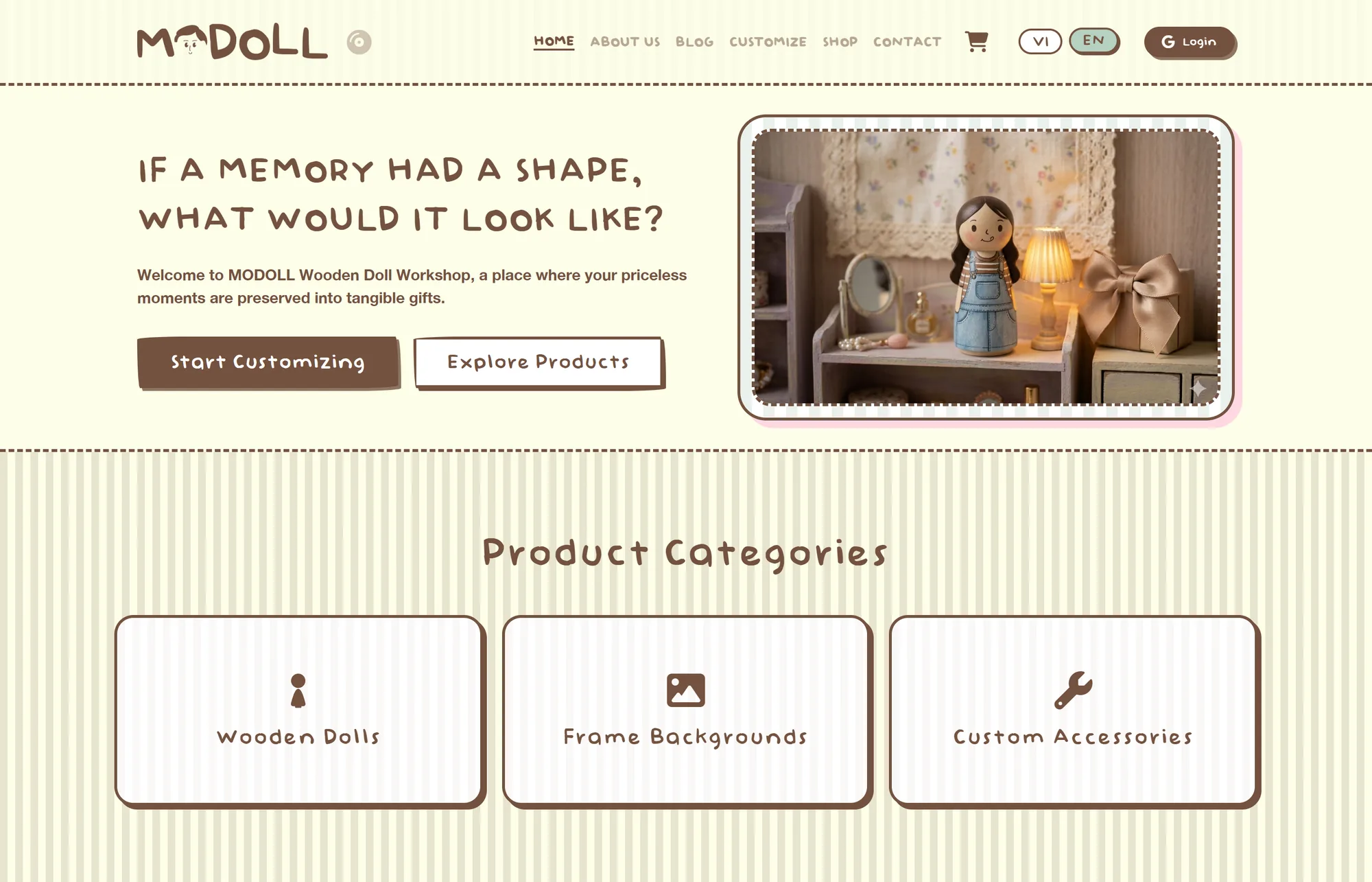
The current ordering process for personalized dolls from brands requires multiple exchanges, and buyers find it difficult to visualize the finished product. The team researched concerns about quality, resemblance to the reference and price.
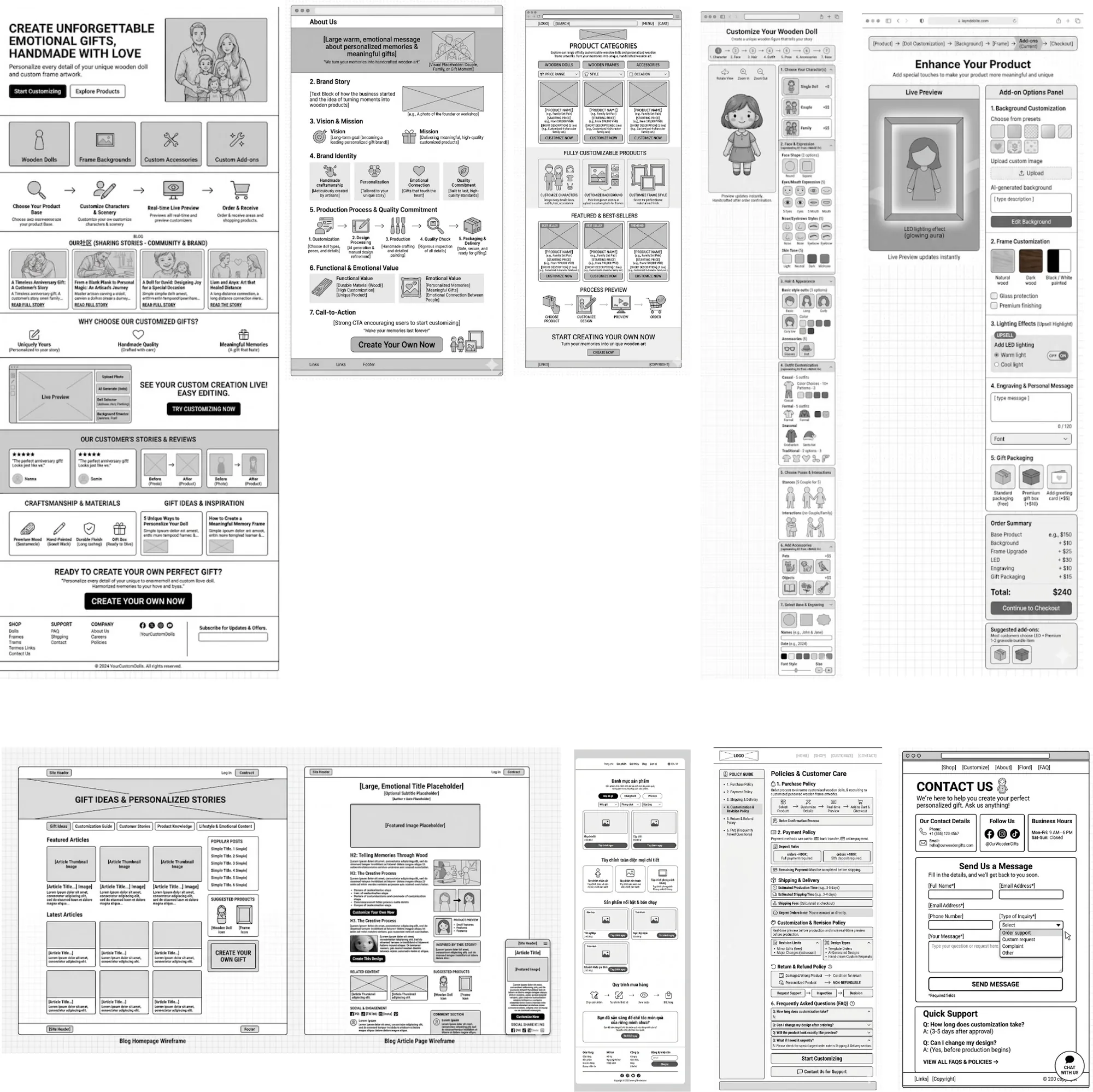
The team conducted market research and studied the brands Chabinu, Dolly Chan and Ppinh.studio, focusing on students and people who had recently entered the workforce. The MODOLL website allows users to select details, preview the doll and frame, then submit the design.
The team interviewed 5 people from the target audience and a fintech professional to evaluate Demo 1: perceptions of the brand, customization, the preview and the ordering flow.
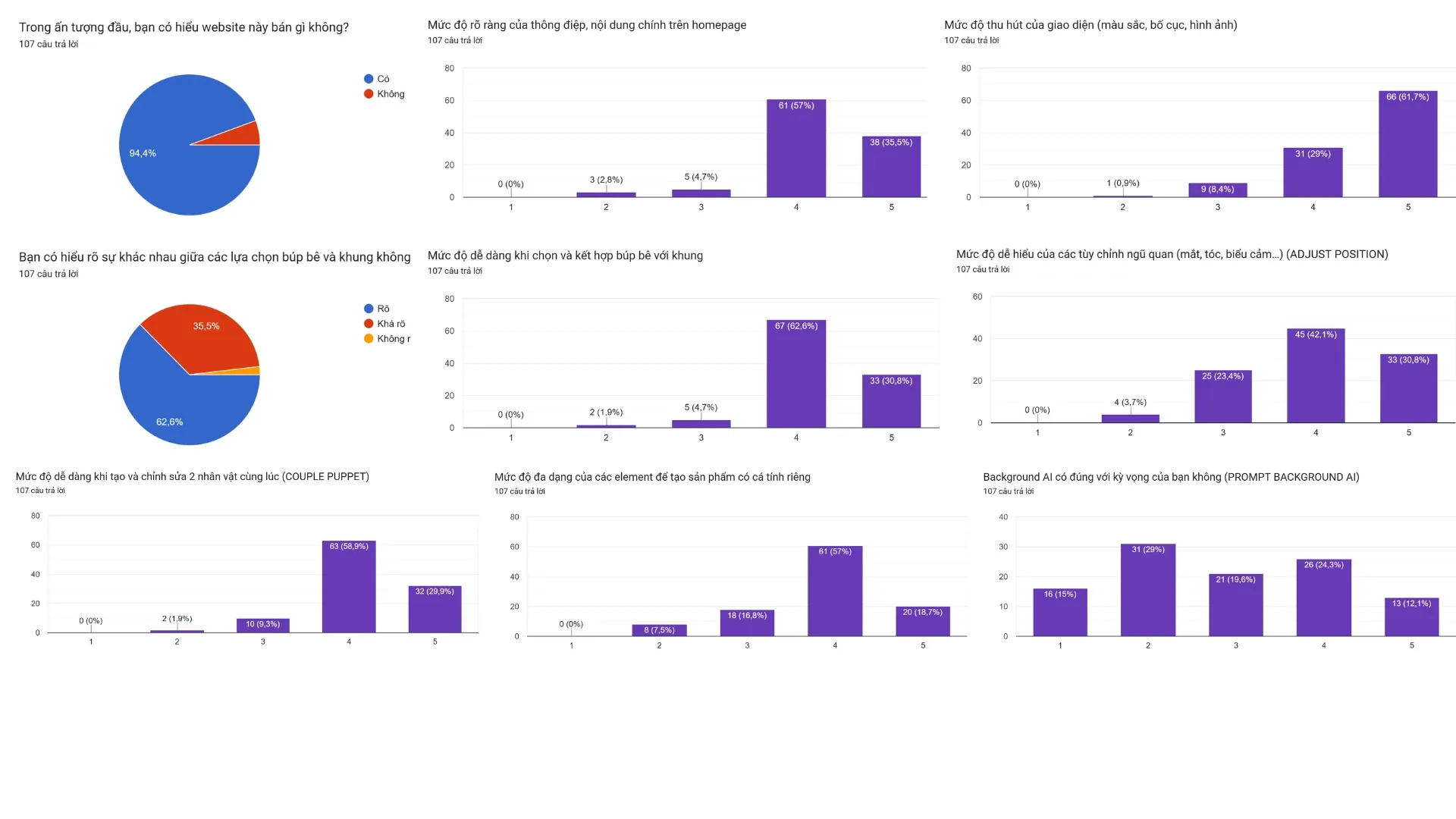
107 people tried and evaluated Demo 2. Their feedback helped the team prioritize consistency, instructions, product information and pricing before completing the final version.
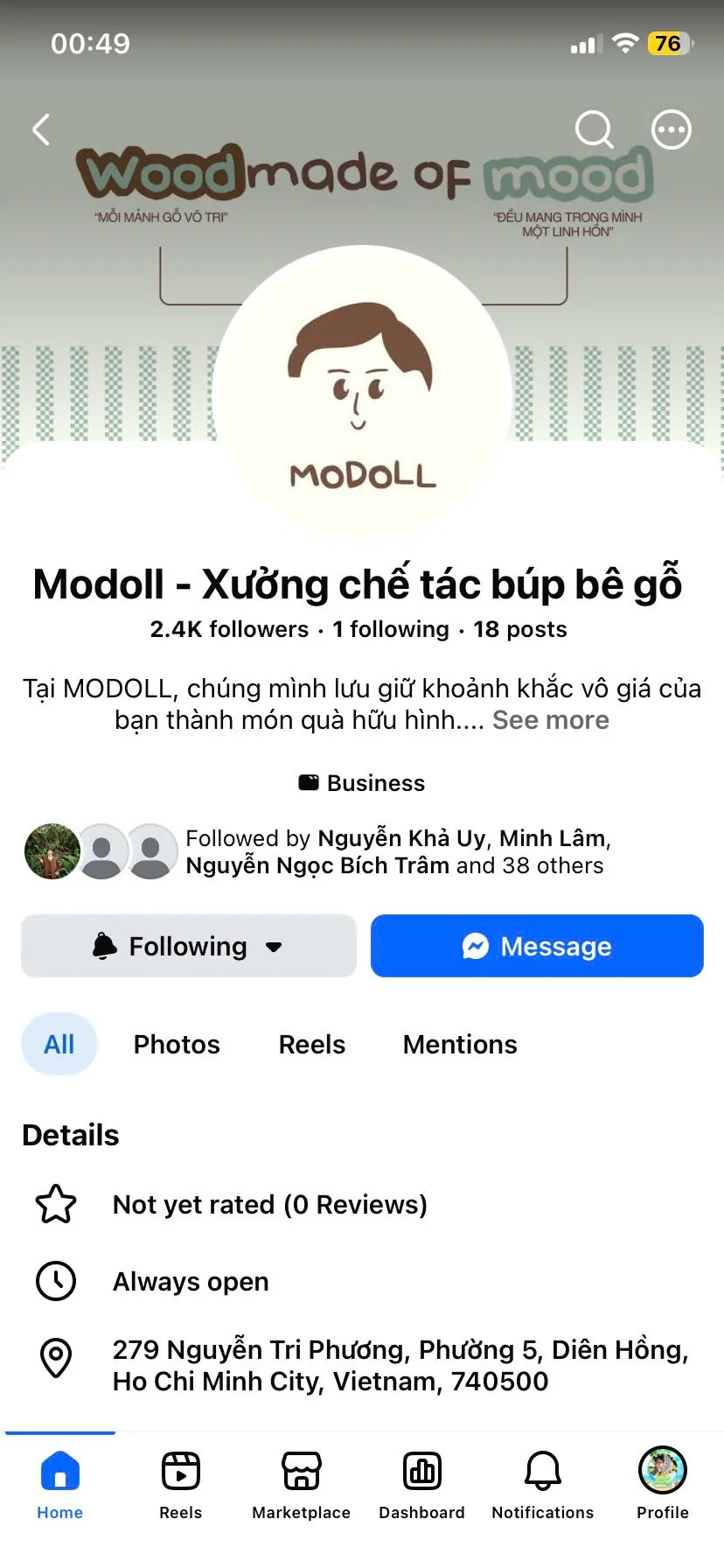
WOOD made of MOOD
“WOOD made of MOOD” connects wood with emotions and memories. MODOLL is positioned as a place where gift-givers help design their gifts, with the approachable voice of a workshop owner.
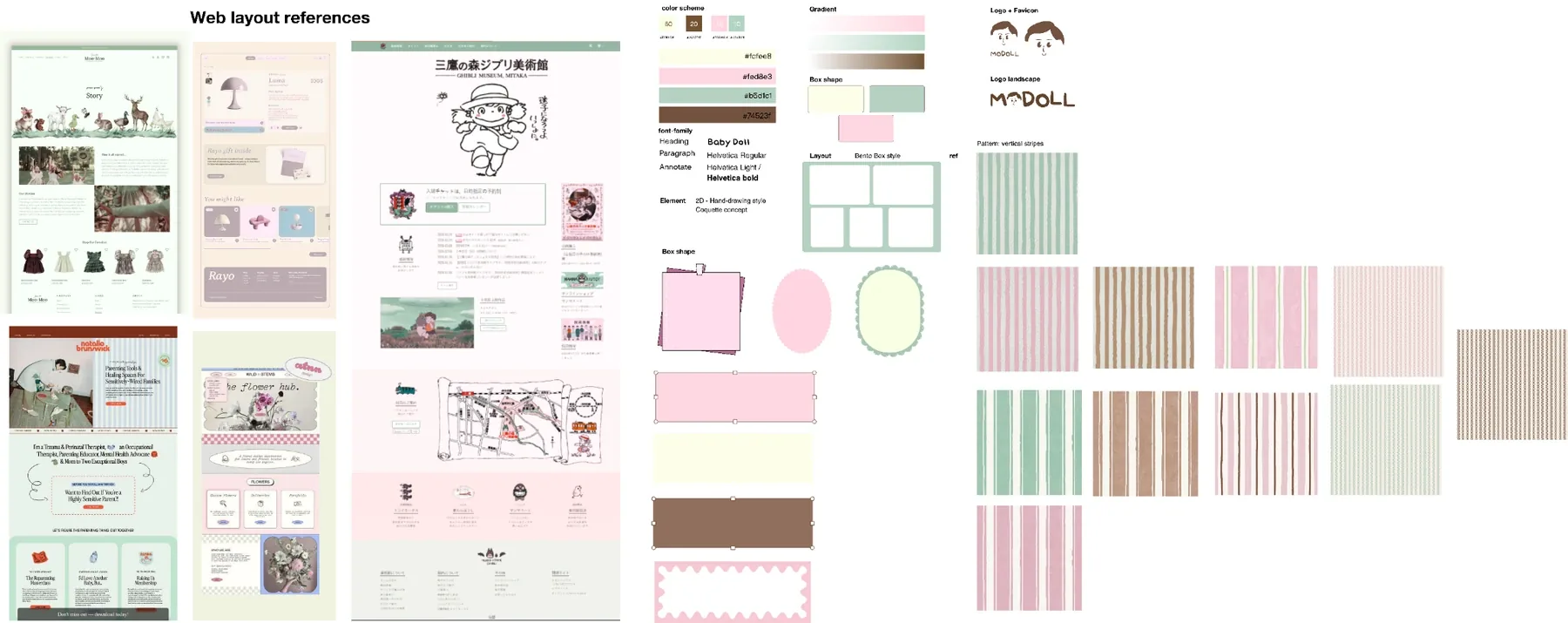
The visual identity uses a hand-drawn logo, wood brown, mint, pastel pink, and vertical stripes. These elements form the basis of the moodboard and brand guidelines.
Social Media tells the brand story; SEO addresses gift searches; Email introduces and suggests experiences.
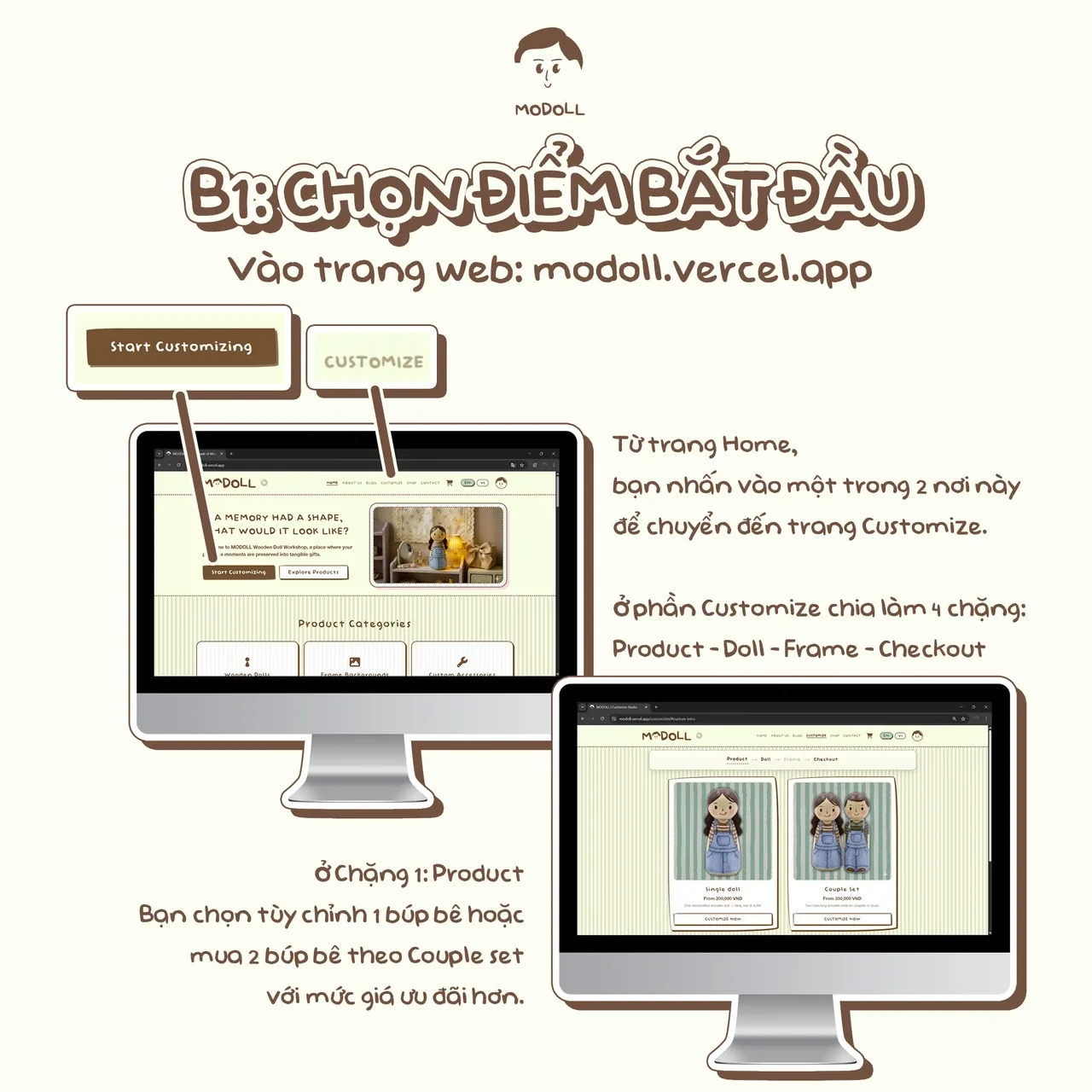
Visitors could explore the products, choose a doll and frame, and watch the preview change with their selections.
Integrated registration and brief submission forms with automated emails to connect the website experience with customer follow-up and invitations to return.
Issues to address The customizer had taken shape, but many pages still contained placeholders; previews were not synchronized, and the cart and checkout were disconnected.
The team invited 5 people from the target audience and one website expert to try Demo 1. Their feedback helped identify priorities for the next version.
The problem People using the website for the first time needed clearer product images and a preview that responded as they made choices.
I added product images, a preview that responded to selections and instructions, then connected Customize → Cart → simulated order.
The team surveyed 107 participants to evaluate Demo 2.
Issues to address Feedback continued to point to a need for more options, consistency, pricing and support information.
I expanded the facial-feature and clothing options, clarified couple mode, pricing and the order-review step. I also added policies, material information, support and confirmation messages.
The team planned the preparation work and three communication phases: awareness, engagement/consideration, and encouraging website use. Social media launched first; SEO and email work began with preparing content, tools, and data connections.
The Project Plan supported overall task allocation and planning for the full project. Each channel’s action plan recorded the person responsible, collaborators, deadlines, and status. The team met weekly to review performance against KPIs and update progress.
See the master plan and responsibilities ↗I managed the project, handled most of the product platform development directly, oversaw plans and briefs, and coordinated the team. I then took charge of social media visuals while all 3 channels ran in parallel.
| Team member | Work |
|---|---|
| Ngân and An | Social Media |
| Tú and Thái | SEO |
| Khang and Thanh |
We coordinated content schedules and links across social media, search and email to bring visitors to the customization website.
01 / SOCIAL MEDIA
Facebook focused on engagement and community; Instagram focused on visuals and brand identity.
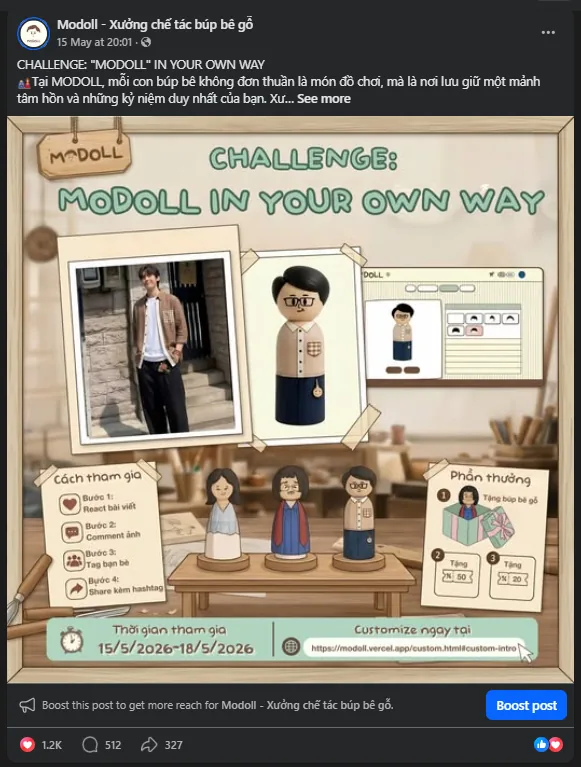
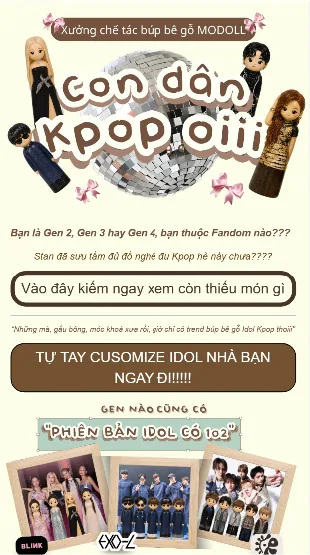
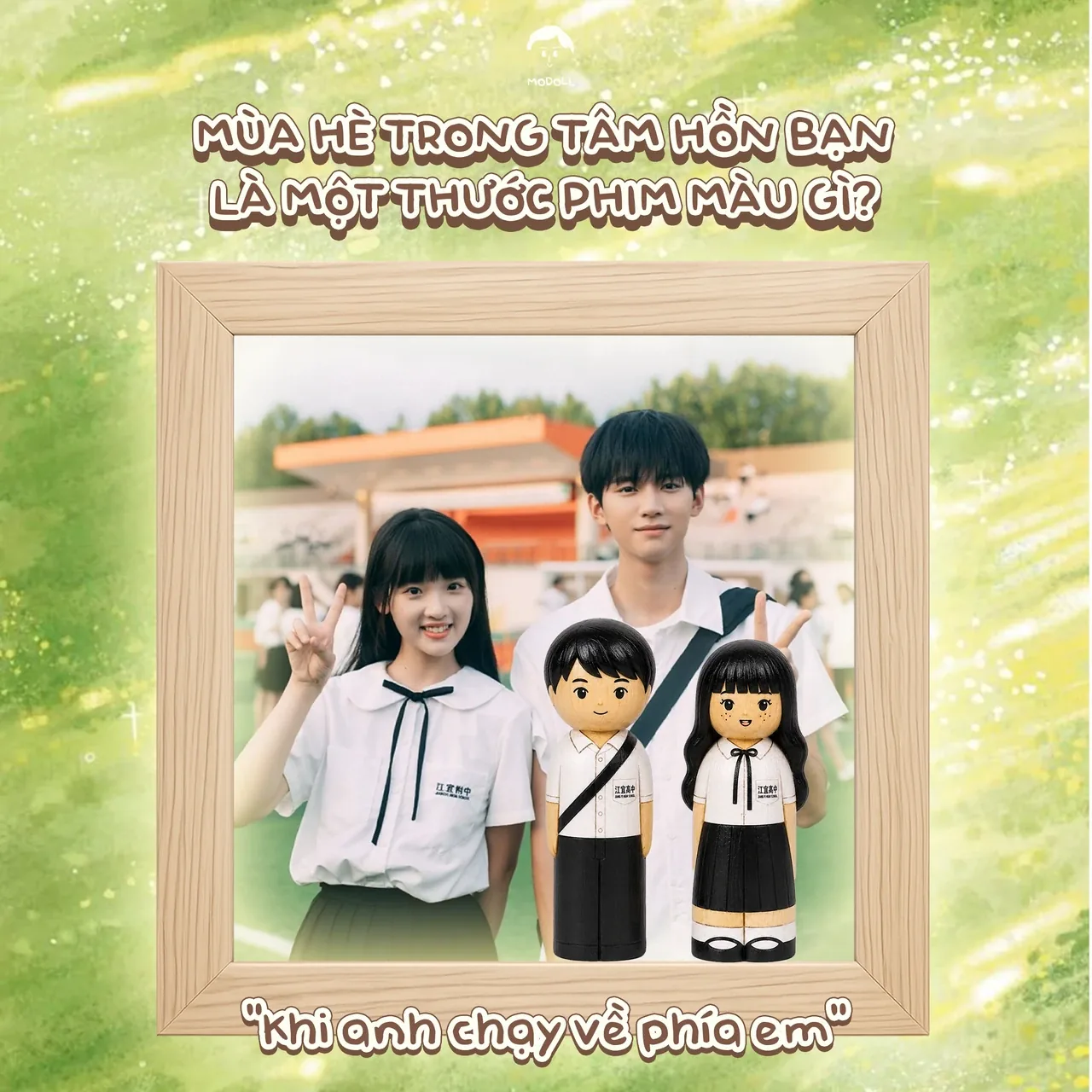
The 17 pieces of content covered brand introductions, customization tutorials, gift stories, summer films, idols, a challenge and invitations to return to the website.
The “MODOLL in your own way” challenge invited viewers to share their own versions, while tutorials and Q&A posts helped explain the product. The team combined posting, seeding and monitoring feedback to adjust subsequent content.
02 / SEO
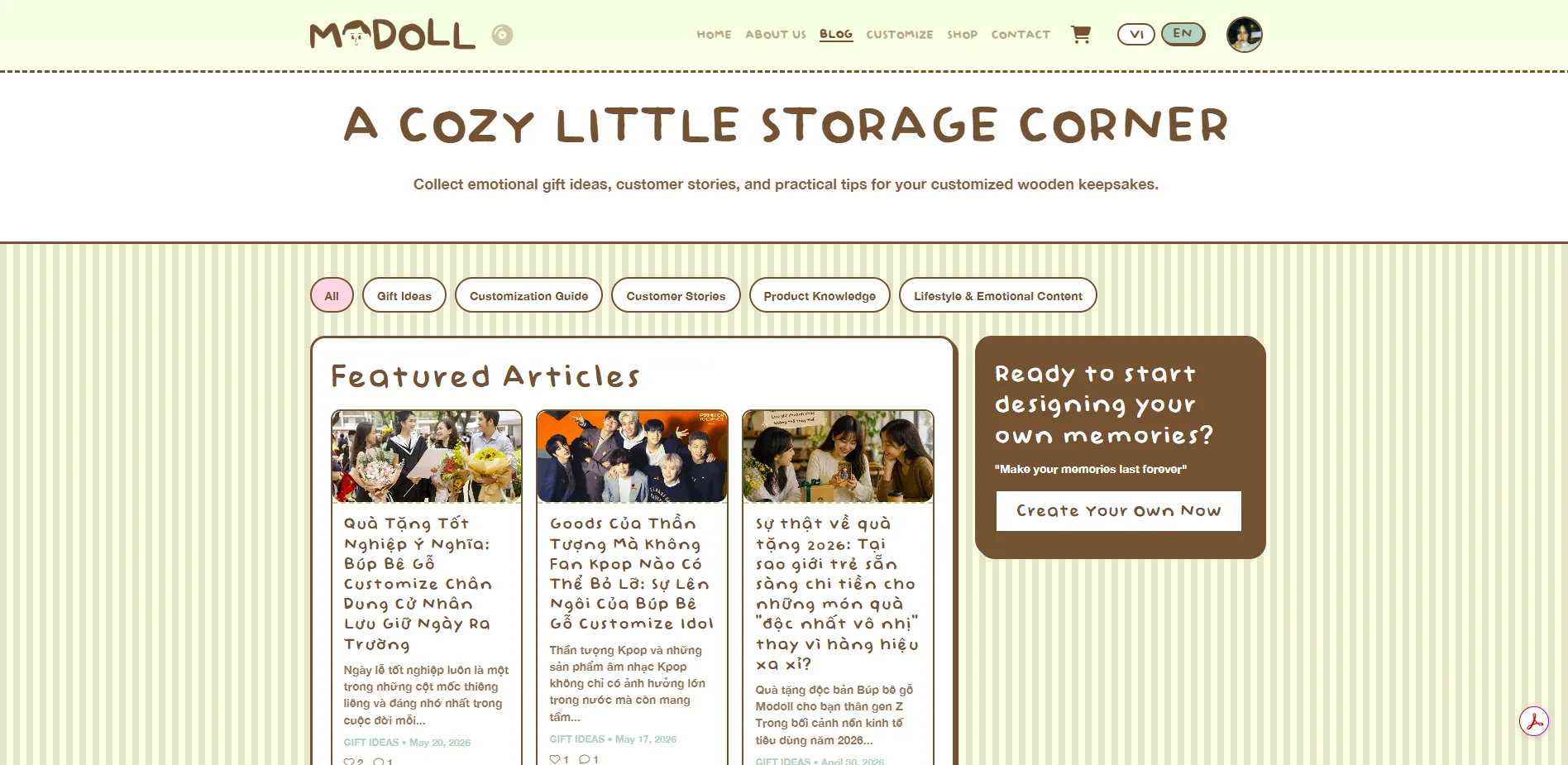
Tú and Thái handled SEO, researching gift-related keywords and developing three groups of blog content.
The work included titles and descriptions, URLs, headings, images and internal links; the articles were promoted through social seeding and email.
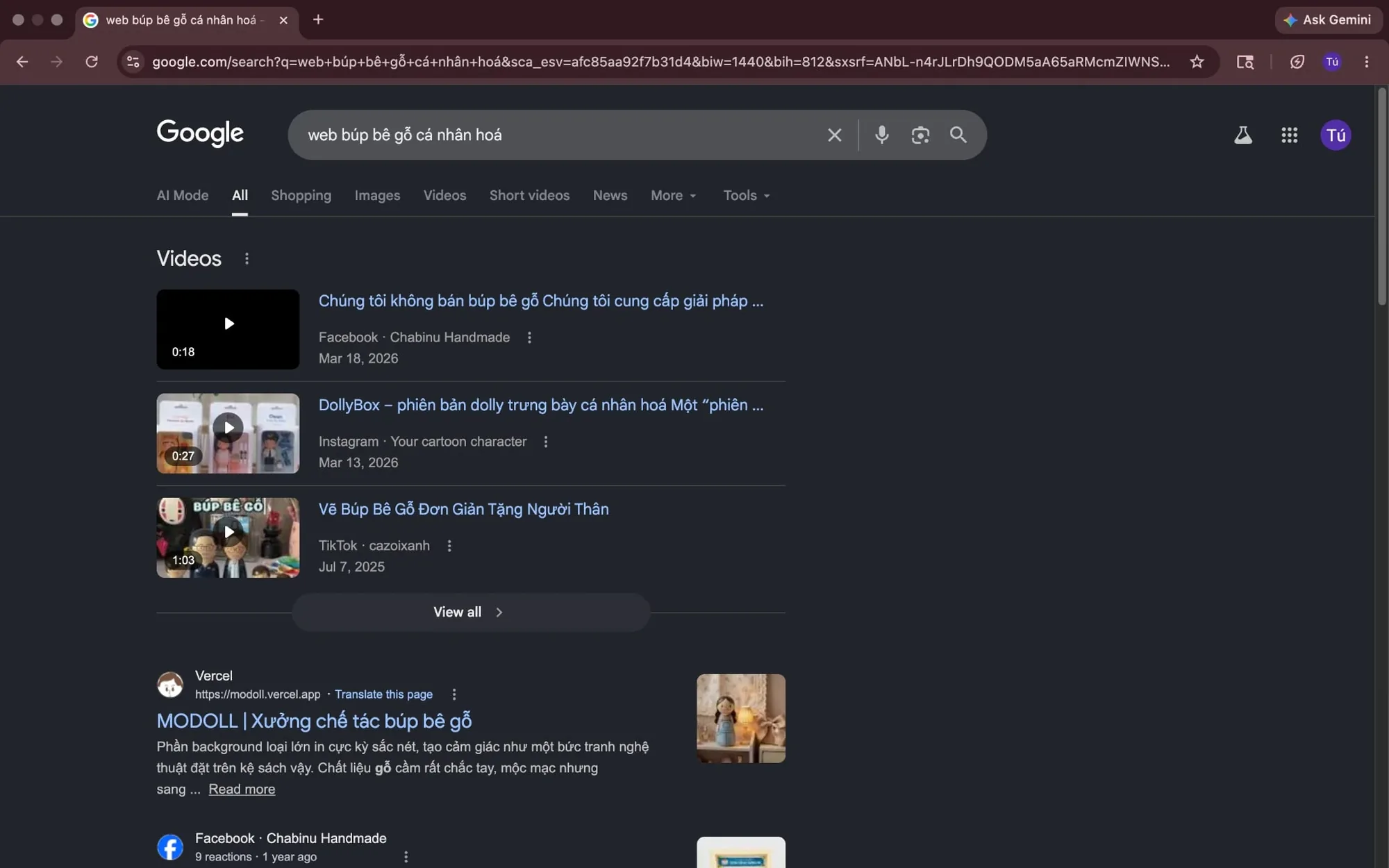
When articles struggled to appear on Google, the team checked language settings, keywords and indexing status in Search Console. The image below records the organic position for one specific query.
03 / EMAIL MARKETING
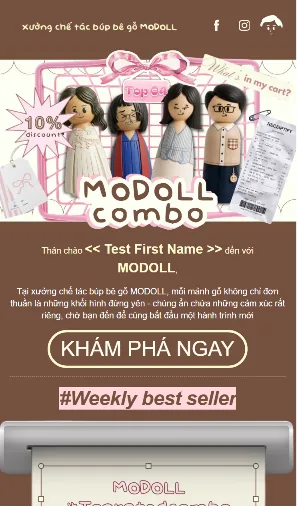
Khang and Thanh handled email marketing, with 14 campaigns on brand stories, customization, gifting and return invitations. Each template used MODOLL’s identity and one main message and CTA.
We grouped recipients by opens and clicks, tested personalization and resent selected emails to non-openers. Two EmailJS flows confirmed briefs and test orders.
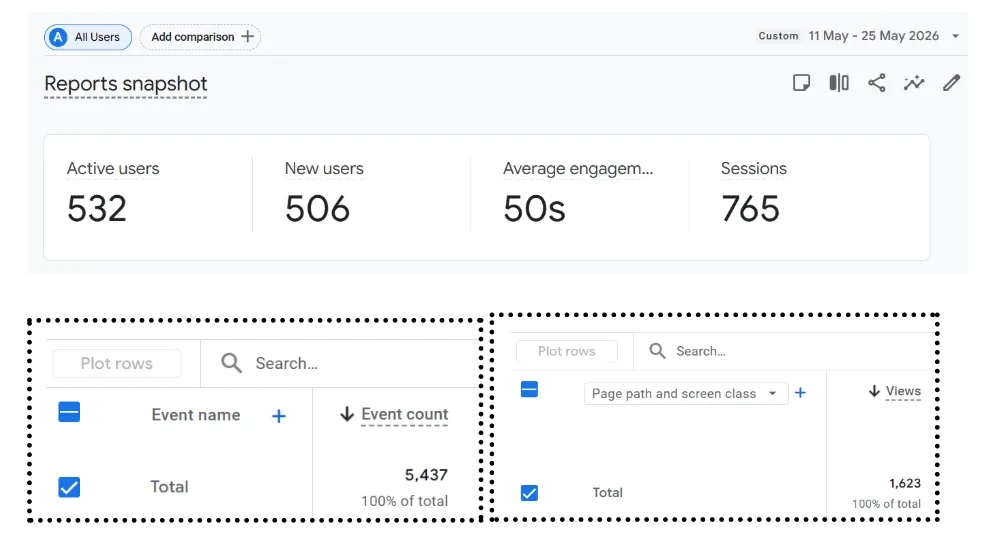
The project recorded website users, social media engagement and purchase inquiries from outside the team. The figures below also show that the transition from viewing content to clicking links needs improvement.
Our lecturer kept the project as a teaching example.
Demo 2 survey · 107 participants · self-reported feedback.
GA4 · 11–25 May 2026 · 765 sessions.
| Channel / period | Metric | KPI | Result |
|---|---|---|---|
| Facebook · 7–27 May | Views | 24,000 | 31,700 |
| Facebook · 7–27 May | Content interactions | 2,600 | 3,300 |
| Facebook · 7–27 May | Link clicks | 45 | 62 |
| Instagram · 16 Apr–6 May | Views | 700 | 2,100 |
Source: MODOLL final report, KPI table by campaign stage · 2026.
People asked about prices and custom orders on Facebook and Zalo. I continued receiving inquiries months after the project stopped.
Facebook/Zalo message excerpts from the project report.
It's not hard, it's just new.
Feedback from the interviews and Demo 2 survey was used to revise the website. The final Facebook phase also showed a gap between content activity and link clicks.
I learned web development with AI while coordinating the project. Breaking requirements into smaller tasks and asking for help helped me work through unfamiliar parts; after MODOLL, I continued learning with Claude and Codex.
The letter goes on.
Back to the poem.